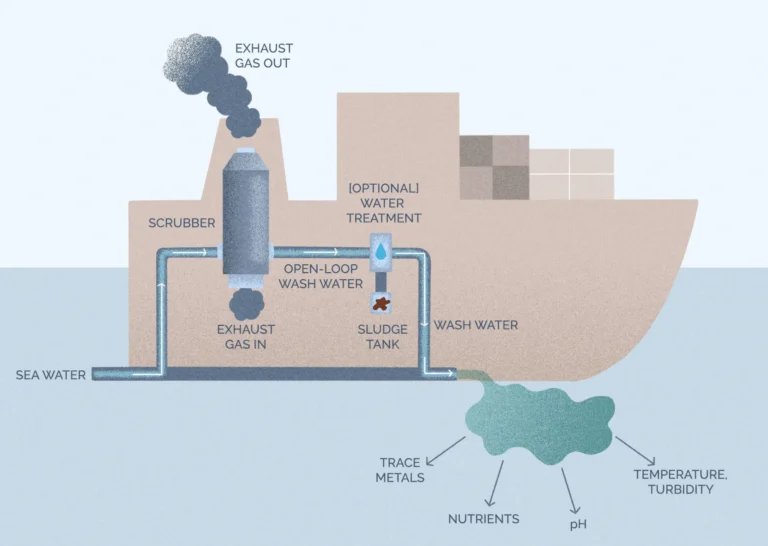
Ahead of the OSPAR Ministerial Meeting — part of the Convention for the Protection of the Marine Environment of the North-East Atlantic, which brings together 15 governments and the EU to protect the ocean from pollution and degradation — in Vigo on 26 June, Seas At Risk, One Planet Port, and 18 other organisations (and counting) are urging OSPAR Environment Ministers to ban toxic wastewater discharge from scrubbers, a method used by ships to rinse pollutants out of their exhaust gases, transferring them from air to water rather than eliminating them, with the resulting wastewater typically dumped directly into the sea or ocean. Implementing this ban would help keep our oceans clean, support healthy marine ecosystems, and accelerate the phase-out of heavy fuel oil, one of the dirtiest liquid fossil fuels on the planet.
A ban on toxic scrubber discharge in OSPAR waters would demonstrate strong regional leadership and align with the principles of both OSPAR and the UN Ocean Conference (UNOC). Currently, 45 jurisdictions (including both countries and individual ports) have already taken action to prohibit or restrict scrubber discharge, but much greater coordination and urgency are needed.
While scrubbers were introduced to reduce sulphur emissions from ships, they enable the continued use of heavy fuel oil, often resulting in even greater emissions of black carbon, carbon dioxide and particulate matter. Furthermore, scrubber waste contains heavy metals, acidic compounds, and polycyclic aromatic hydrocarbons (PAHs), posing a significant threat to marine life and human health, especially in coastal communities.
As the shipping sector transitions toward decarbonisation (all greenhouse gases), simply switching to low-sulphur fuels is not enough to protect the oceans or meet climate targets. Truly green solutions from wind propulsion and zero-emission fuels to renewable technologies already exist and can enable deep emissions reductions, delivering both clean air and clean water while honouring our climate obligations.
For further reading, see our blog post on the Dutch context to learn how scrubber discharge is being addressed in the Netherlands.